
Stokes County, North Carolina, 1870
6 minute read
Traces of a Homesteader’s Heart: The Story of Martha’s Log Cabin:
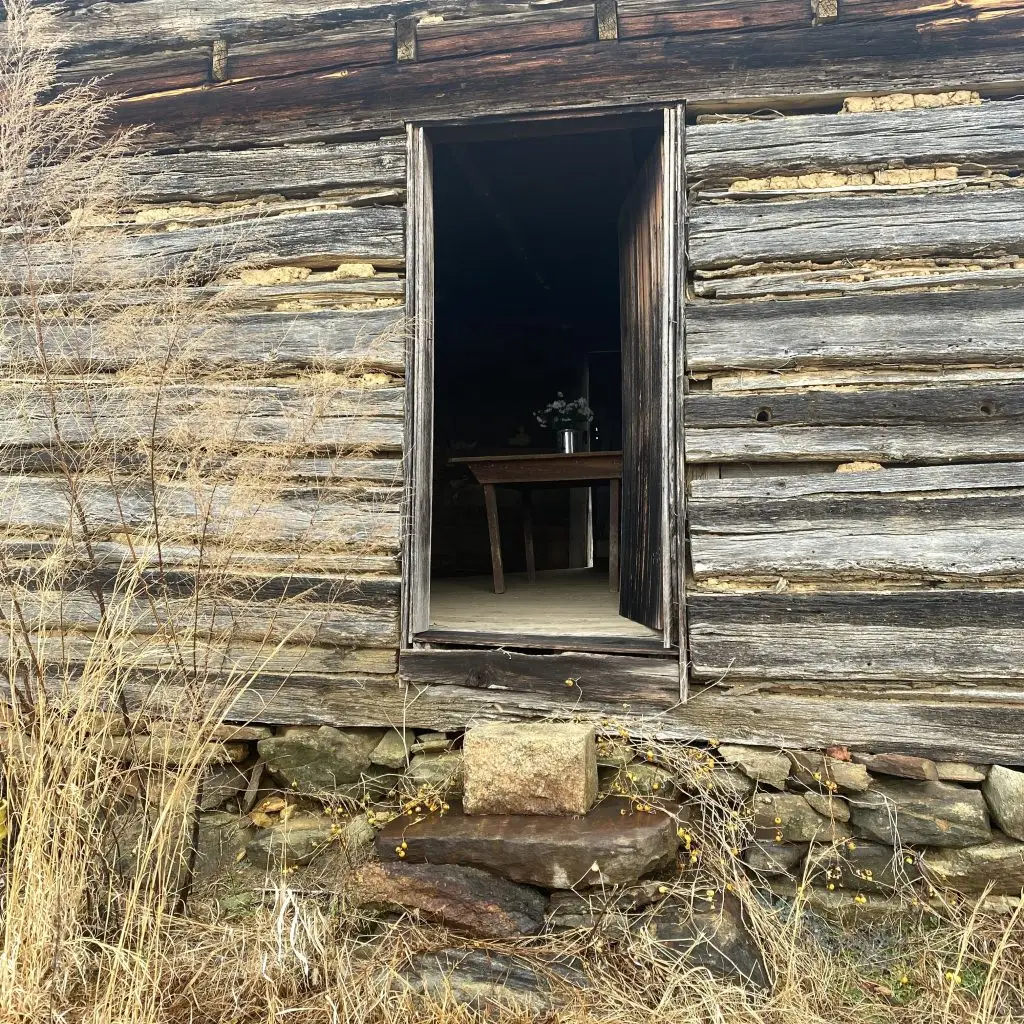
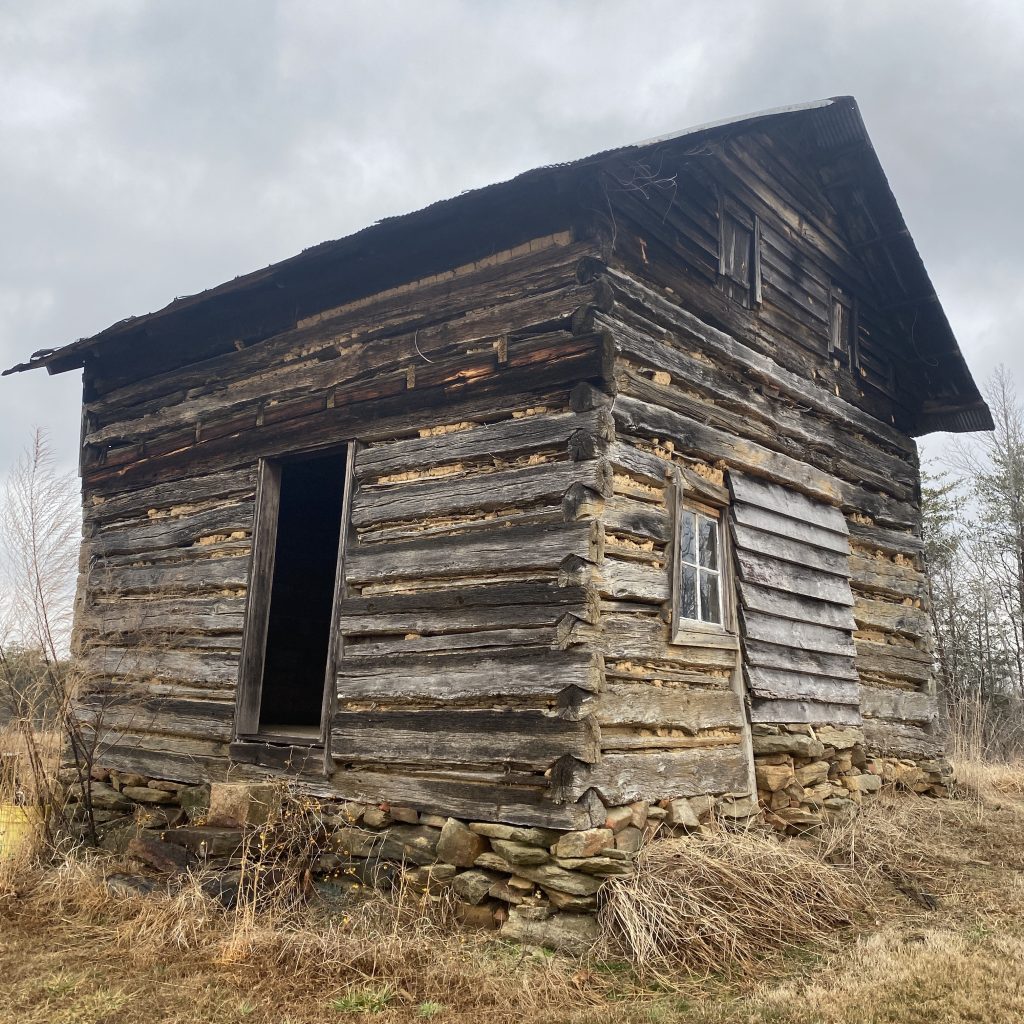
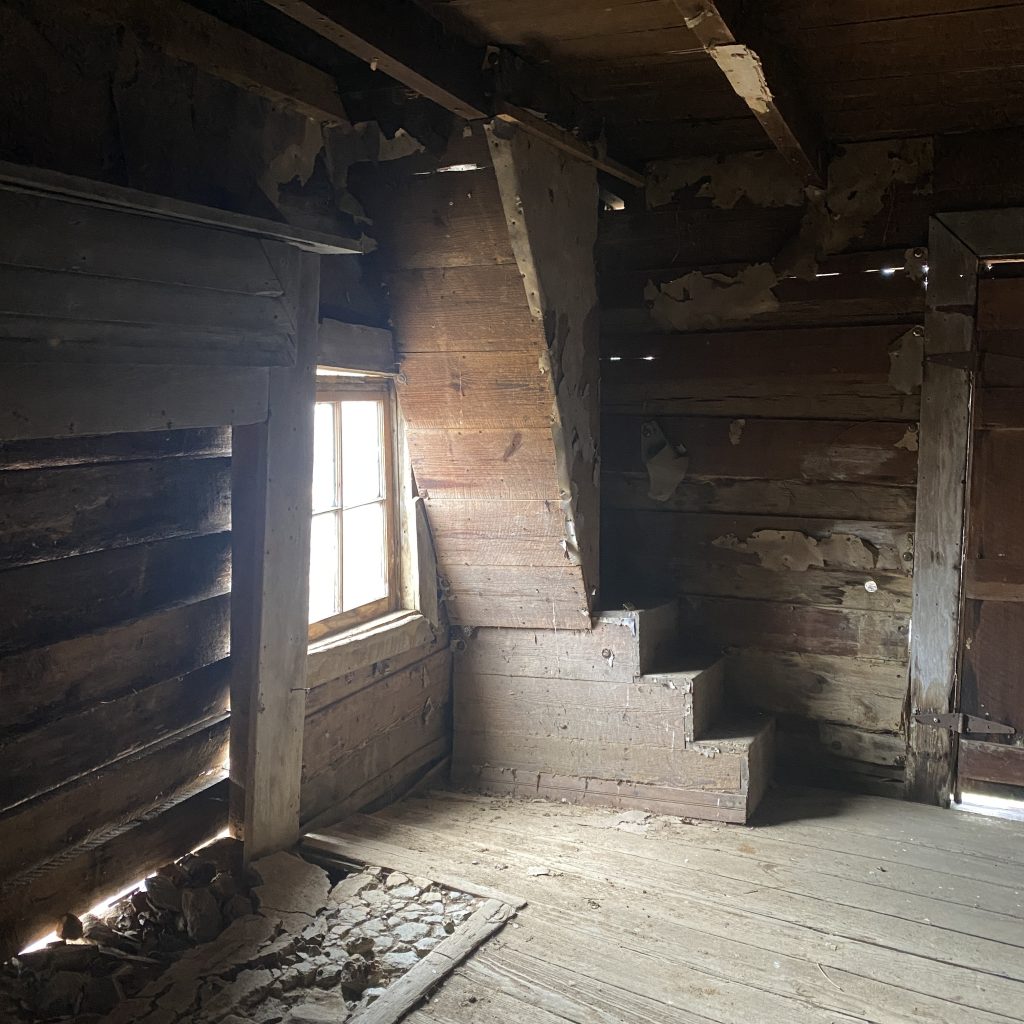
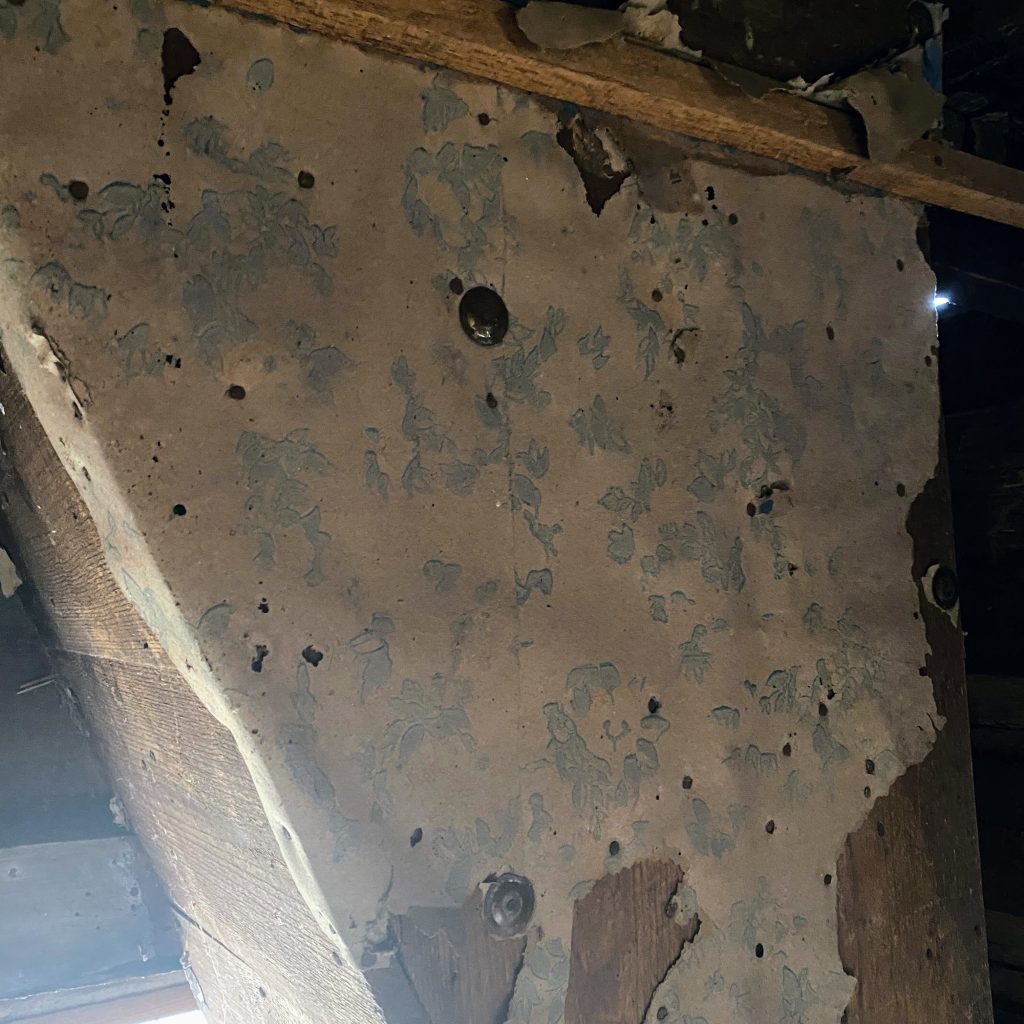
In the rolling hills of Stokes County, North Carolina, a humble log cabin stands as a testament to a family’s resilience, love, and loss. Found on the same land as a farmhouse I considered buying a few years ago, this primitive structure was the original homestead of Joel and Martha Simmons, built in 1870. What began as a curious exploration of an old cabin and its scattered relics became a deeply moving journey into the life of a woman whose strength, faith, and community ties linger in the faded floral wallpaper and broken dishes I found in the red clay soil.
A Cabin Built on Love
Joel Simmons was 23 years old when he married his 16-year-old bride, Martha, in Stokes County, a region bustling with tobacco farms, gristmills, and cottage industries like blacksmithing and distilleries. The cabin, with its stone chimney likely sourced from the nearby creek, was simple yet rich in character. Although I can’t find any records that explicitly state Joel built this cabin, it was described on the real estate listing as the original homestead on the property, and could reasonably be assumed he built it just prior to their union. Even a cabin of this size would have been considerable work to complete by hand.
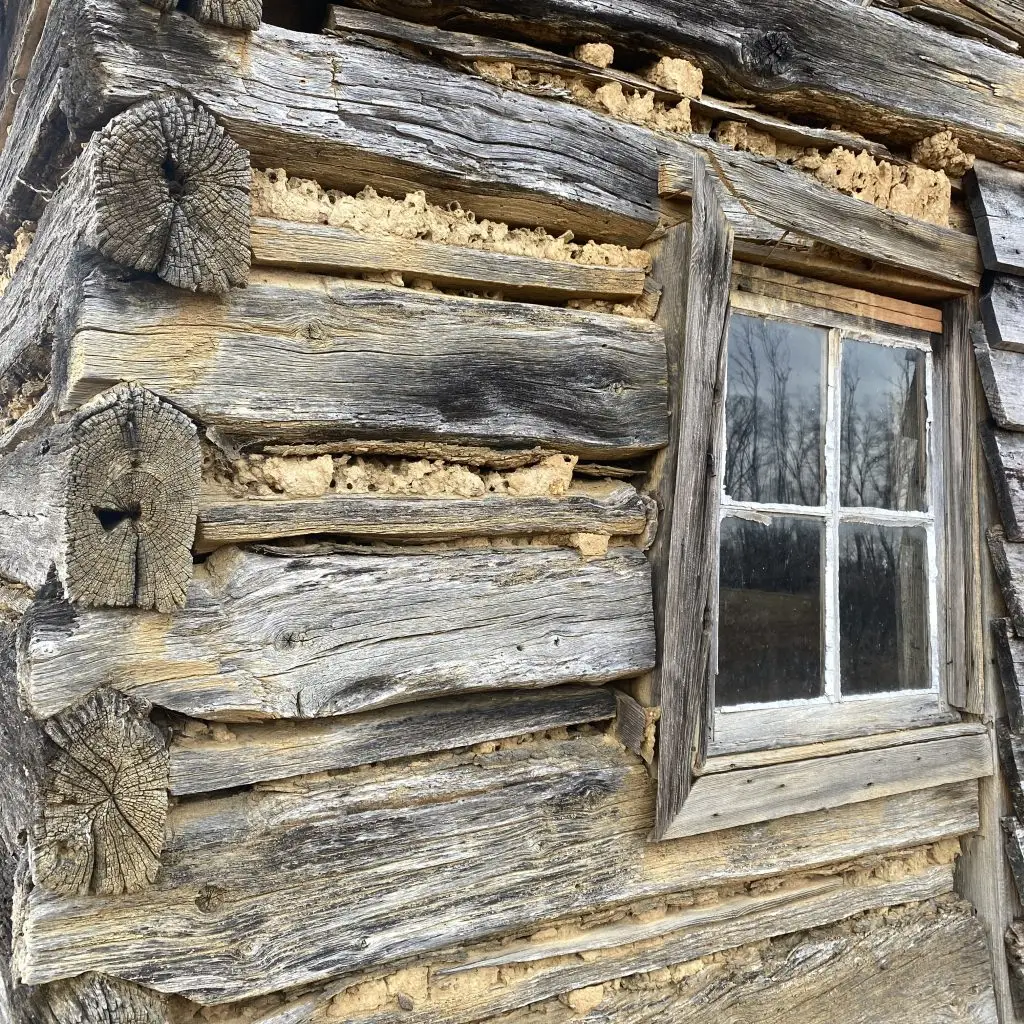
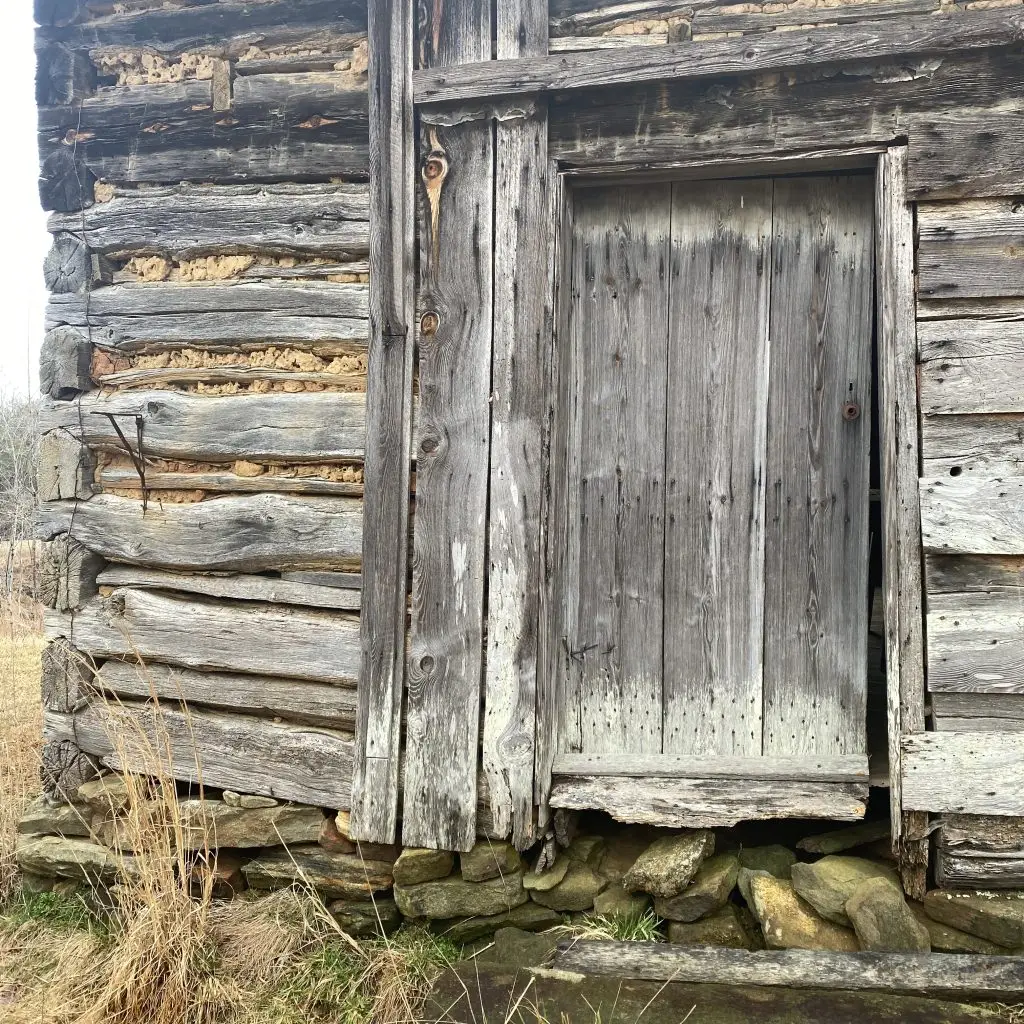
Joel and Martha’s life was rooted in the land. The 1880 census lists Joel as a farmer, likely growing tobacco or crops to support their growing family. Martha, a homemaker, filled the cabin with the warmth of family life. In 1872, at just 17, she welcomed their first child, a daughter named Rilla, followed by 11 more: Calvin, Mary, Powell, Fletcher, Fannie, Martha, James, Robert, John, Joel, and Roy. All were likely born within these log walls, their days shaped by farm chores and the simplicity of rural Stokes County. As tiny as the cabin was, it was hard to imagine such a large family living in such tight quarters.
Treasures in the Soil
When I visited, the fields around the cabinet had been freshly plowed, revealing artifacts from the Simmons family’s past. As I walked the grounds, I gathered broken glass, china, and pottery, each piece coated in North Carolina’s red clay. These fragments felt like tangible connections to Martha’s life—shards of dishes that once graced her table, now resting in my hands over a century later. Knowing her story, these finds have become cherished keepsakes, each one a link to the family Joel and Martha built.
The Simmons Family Cemetery
At the edge of the woods within easy eyesight of their log cabin, lay the Simmons Family Cemetery. Martha’s life was marked by profound loss, beginning in 1890 when their daughter Rilla died on March 13, 1890 at age 17, the first to be laid to rest in the family cemetery. Less than four months later, on July 7, 1890, Martha gave birth to their son Robert, who died the same day, becoming the second to be buried in the family plot. One month later, she laid to rest their son John, who passed at just 13 months old. Their 12th child, a baby boy named Roy born in 1893, was buried the following year in 1894, marking their fourth child they lowered into the grounds of their quickly growing family cemetery.
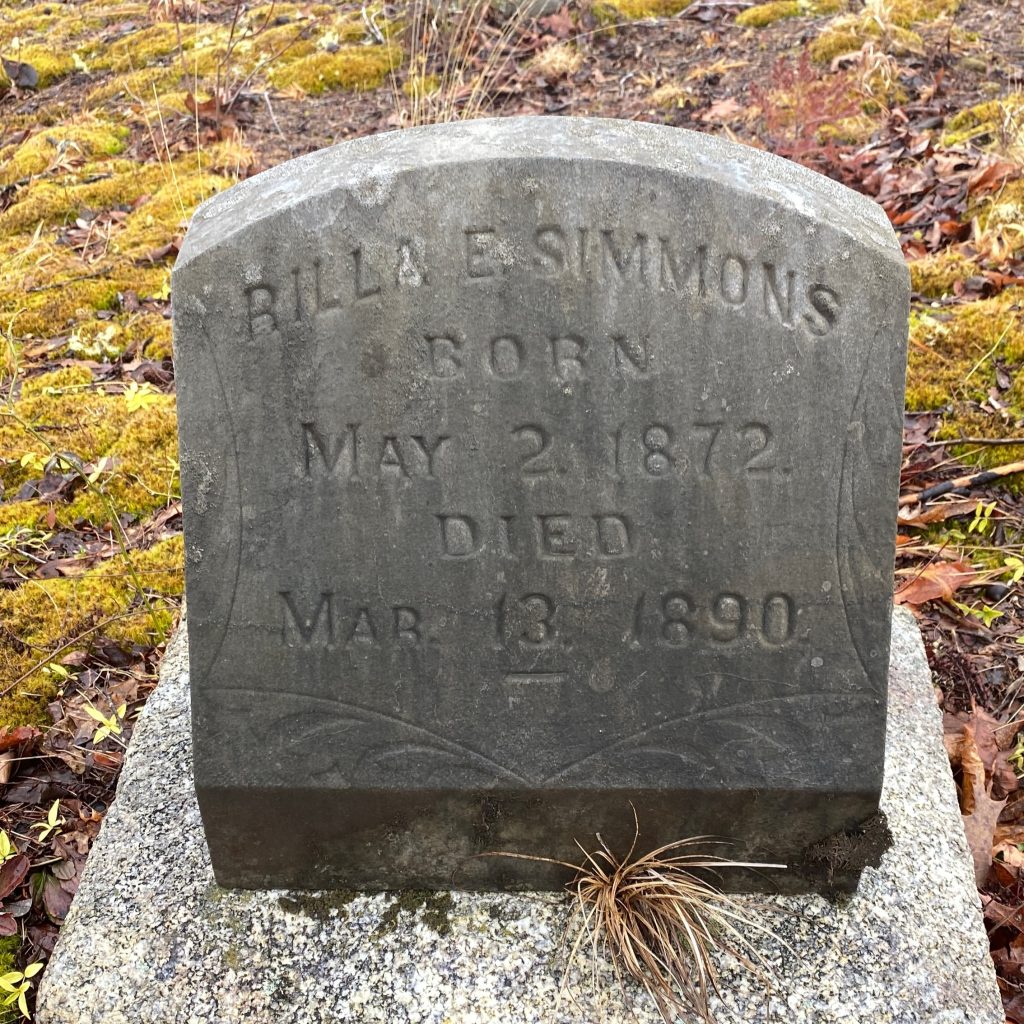
The sight of those weathered headstones, visible from the cabin’s front door, brought a lump to my throat. As I walked from the cemetery back to the cabin, I pictured Martha standing in that doorway, her hand over her heart, gazing toward the graves of her loved ones.
You Might Also Like: Infiltrating Alcatraz >
A Mother’s Unyielding Spirit
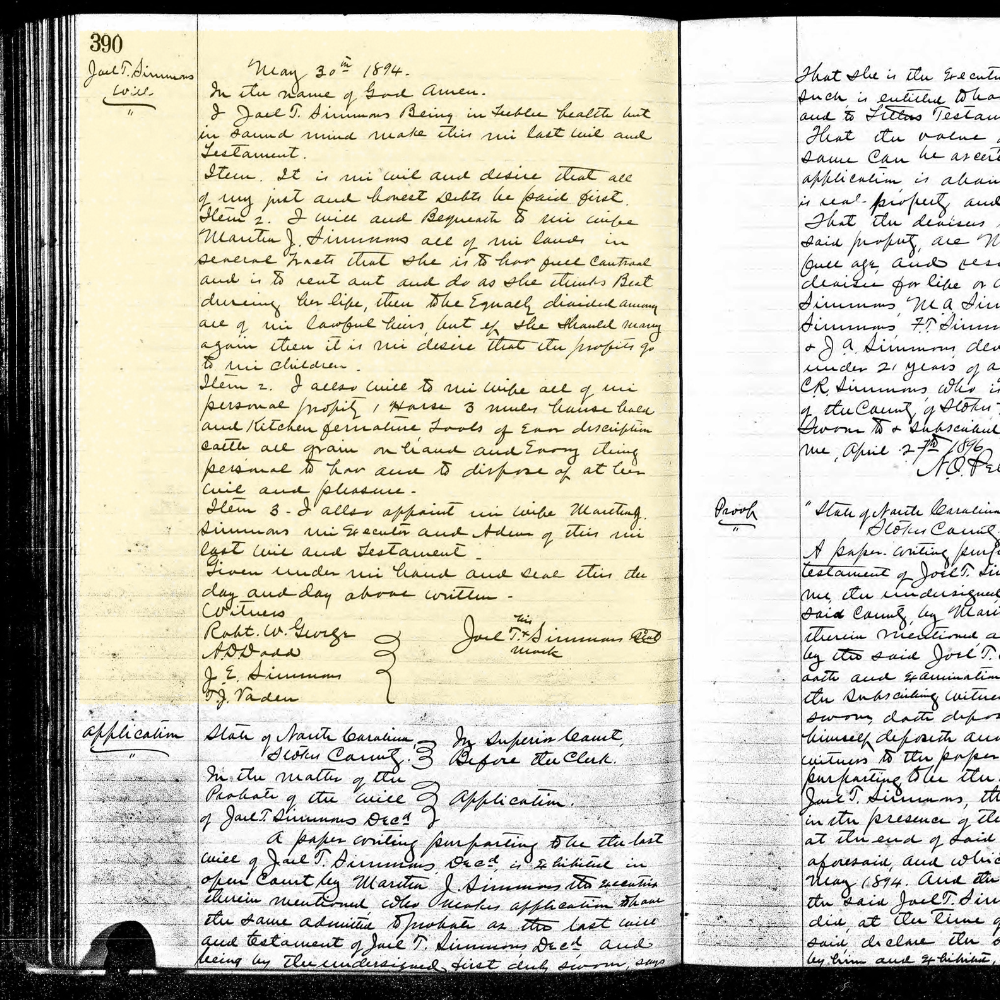
In 1895, Martha faced her deepest sorrow yet, burying her husband, Joel, whose death date is unclear but inferred as 1895 from family records. Joel had written his will on May 30, 1894, and I couldn’t find details of his passing, but the timing makes me wonder if he was battling illness, preparing his family for a future without him.1
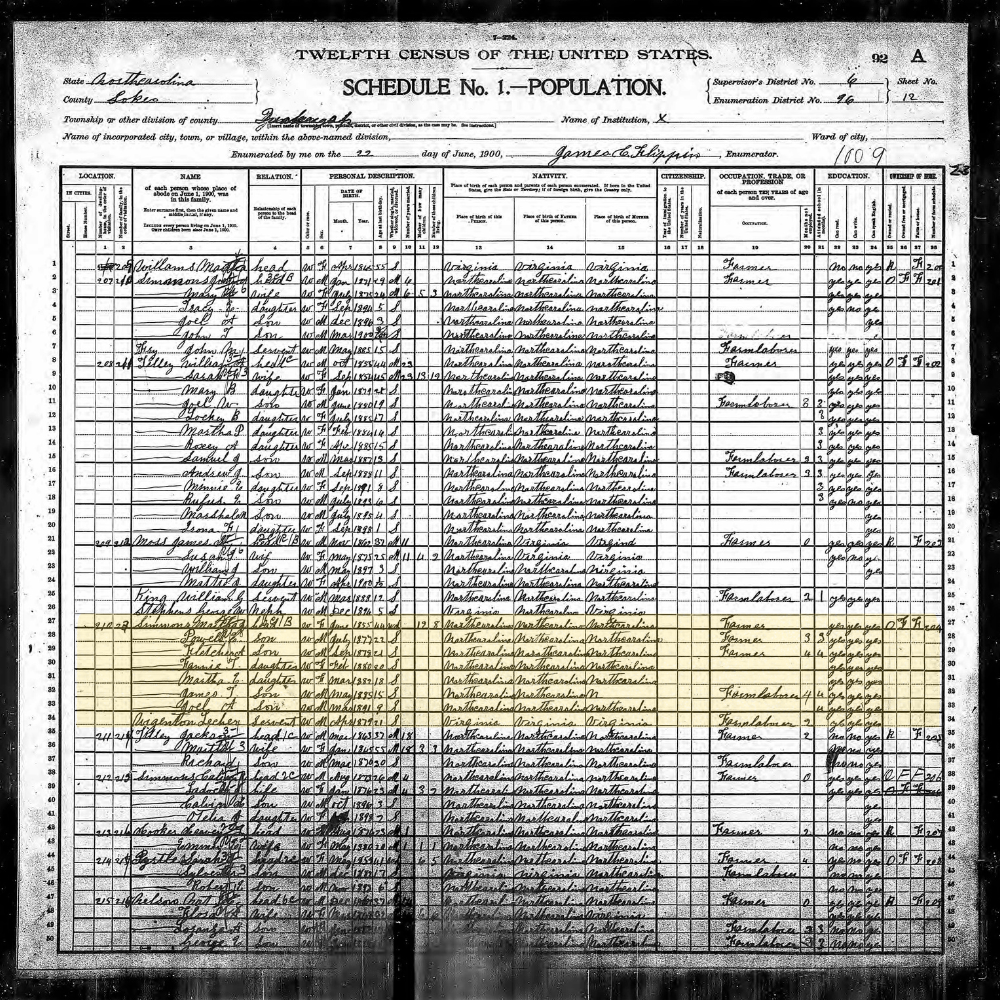
Widowed at 43 with eight children—Calvin, Mary, Powell, Fletcher, Fannie, Martha, and James, Joel— Martha’s role shifted. The 1900 census listed her as the head of household and farmer, a testament to her resilience. To help keep the family farm going, she hired a young farmhand named Lecher Wigenton.2
A Legacy Worth Preserving
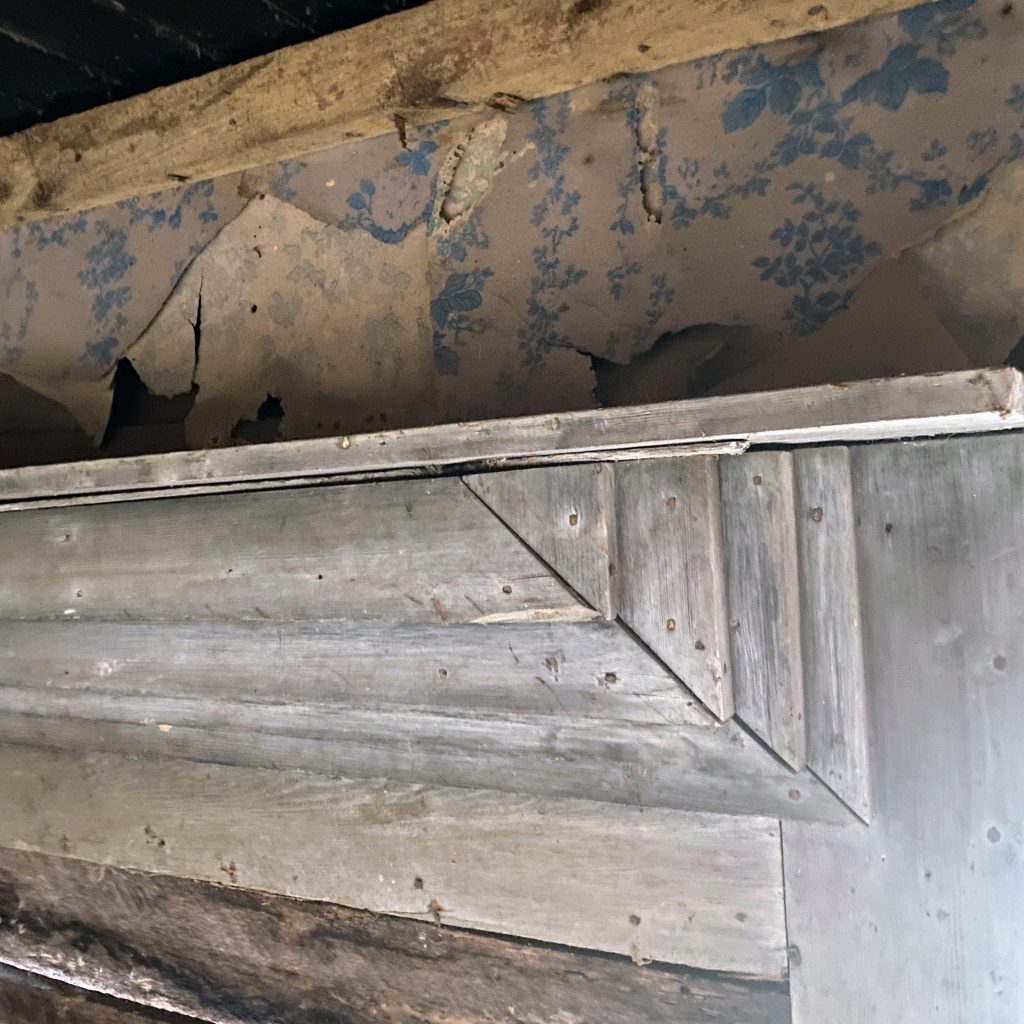
Martha’s story feels profoundly special, like a thread connecting me to a woman who lived, loved, and endured in that tiny cabin over 150 years ago. The blue floral wallpaper still hanging on the walls, the broken dishes I collected, and the cemetery where she laid her family to rest all tell a story of a life both ordinary and extraordinary. I felt my hand over my heart as I wrote her story, moved by the weight of her losses and the strength it took to carry on.
Martha was an active member of the Pilot Mountain Baptist Church, and her husband Joel was known as a Baptist preacher, perhaps taking up this calling later in life after his farming years. Their shared faith likely anchored Martha through their losses, offering solace that she’d be reunited with them in the next life.
You Might Also Like: Sheldon Church Ruins >
A Legacy Carried Forward
Martha’s story feels profoundly special, like a thread connecting me to a woman who lived, loved, and endured in that tiny cabin over 150 years ago. In her later years, she lived with her sons Powell, a clothing merchant, and Joel, a deputy sheriff, reflecting the family’s continued prominence in Stokes County.
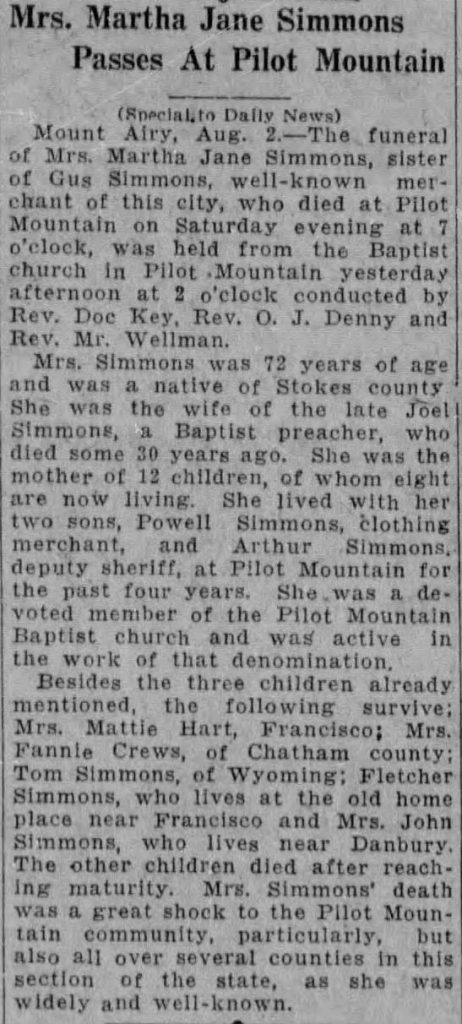
Her passing left a void, as noted in her 1927 obituary in the News and Record: “Mrs. Simmons’ death was a great shock to the Pilot Mountain community, particularly, but also all over several counties in this section of the state, as she was widely and well known.” This description underscores the deep impact of her faith, family, and community ties.
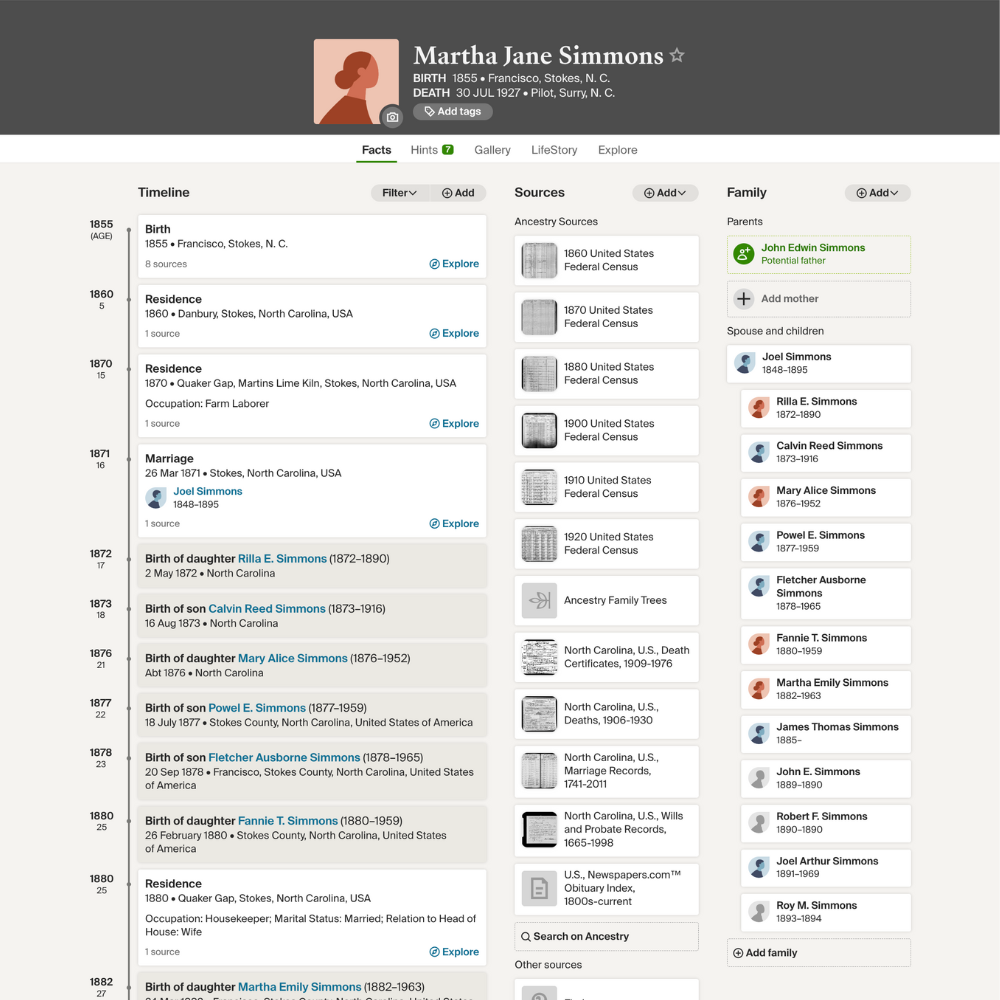
To preserve her legacy, I uploaded several missing headstones from the Simmons family cemetery to FindAGrave and edited the relationships of the children to their parents, which were previously absent, basing my corrections on careful study of census records on Ancestry. I also created a Simmons family tree, including all 12 children—Rilla, Calvin, Mary, Powell, Fletcher, Fannie, Martha, James, Robert, John, Joel, and Roy—so their descendants can find not only their lineage but also photos of the cabin where Martha raised her babies, blue wallpaper and all.3
This cabin, its cemetery, and the fragments of Martha’s life scattered in the soil are more than relics; they’re a reminder of the enduring power of family, resilience, and the small choices—like a roll of floral wallpaper—that leave a mark on history. I’ll share a video soon of the broken dishes and the family cemetery, keeping Martha’s story alive for anyone who, like me, feels drawn to the traces of her heart.


Leave a Comment